
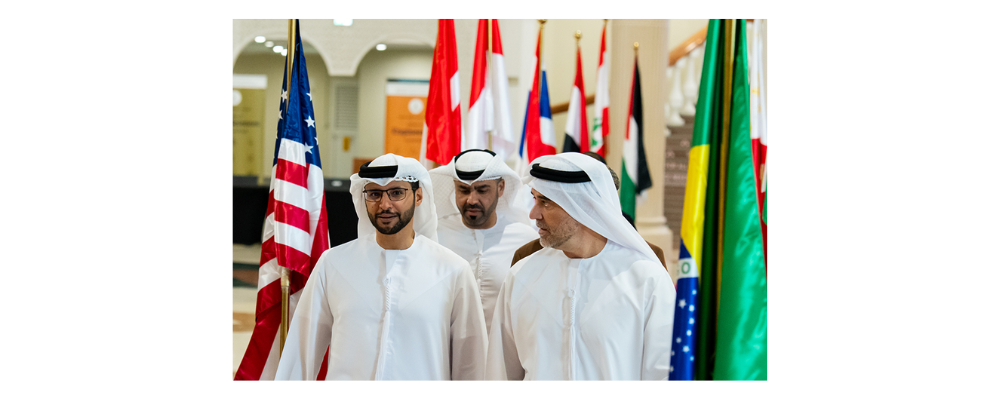
American University of Sharjah (AUS) inaugurated four founding Youth Embassies on November 14, officially launching a student-led initiative to deepen international understanding and cooperation. The embassies represent Bahrain, India, Morocco and Russia.
The Youth Embassies initiative aims to empower young people to explore, understand and contribute to global cooperation through education, dialogue and practical initiatives. It gives students opportunities to engage with different perspectives, build meaningful partnerships and strengthen cooperation between the UAE and the countries represented.
Community Connect at AUS hosted the launch. By bringing leading voices into dialogue with the AUS community, Community Connect serves as AUS’ platform for structured engagement with institutions worldwide and aims to build lasting collaborations through dialogue, knowledge sharing and applied learning opportunities.
In his opening remarks at the launch event, AUS Chancellor Dr. Tod A. Laursen underscored the role of people-to-people relationships in international cooperation and the purpose of the four founding embassies: “International cooperation cannot depend solely on governments and institutions. It must also be built through relationships between people, through mutual understanding and through a genuine willingness to listen to perspectives different from our own. That is what makes the Youth Embassies initiative particularly meaningful. By establishing its first four embassies dedicated to Bahrain, India, Morocco and Russia, this initiative creates opportunities for young people to engage across borders, learn from one another and turn dialogue into meaningful cooperation.”
During the event, Youth Embassies founder Alyazyah Ebrahim Al Shehhi, an international studies student at AUS, shared the vision behind the initiative. The National Youth Address was delivered by H.E. Khalid Mohammed Al Nuaimi, Director of the Federal Youth Authority, who has played an important role in supporting youth empowerment and participation across the UAE.
H.E. Al Nuaimi said: “A young person who understands diplomacy can become a bridge between communities. When students study different societies, listen directly to their people and build projects together, they create the human foundations of cooperation. The Youth Embassies turn that responsibility into a real opportunity for AUS students.”
A fireside chat featuring H.E. Omar Saif Ghobash, Advisor to the UAE Minister of Foreign Affairs, Ambassador of the UAE to the Holy See, member of the AUS Board of Trustees and mentor of the Youth Embassies, explored youth engagement, international cooperation and the role young people can play in strengthening relationships between nations. It was moderated by Ahmed Al Qassimi, an international studies student at AUS and Cultural Attaché of the Russian Youth Embassy.
H.E. Ghobash said: “Enduring relationships between nations is carried forward by people who know one another, trust one another and can speak across differences. The Youth Embassies give students the chance to begin building those ties now and to shape a more connected future through curiosity, respect and sustained engagement.”
The ceremony formally inaugurated the four founding Youth Embassies. Izma Fatima, an international studies student, is ambassador of the Youth Embassy of India. Meryam Nakkabi, a master’s student in international studies, is ambassador of the Youth Embassy of Morocco. Hasan Hashem, a civil engineering student, is ambassador of the Youth Embassy of Bahrain, and Asiia Aleeva, a supply chain management student, is ambassador of the Youth Embassy of Russia. The ambassadors shared brief presentations about their countries with the attending dignitaries.
The program also featured an Arabic-language masterclass led by Ahmed Saeed Al Alawi, Editor-in-Chief of CNN Business Arabic and Al Ain News. Titled “Leading Through Uncertainty: Youth Leadership, Strategic Communication and Crisis Management,” the masterclass drew on Al Alawi’s newsroom experience to explore how leaders make decisions, manage crises and communicate under pressure.
Al Alawi said: “In moments of uncertainty, words shape what people understand, how they respond and whom they trust. Media professionals must verify facts, communicate with precision and show sound judgment under pressure. These skills are built through practice, and young people can begin developing them long before they enter the newsroom or public life.”
AUS connects students with leaders in industry, government and institutions worldwide, giving them opportunities to exchange ideas, learn from professional experience and build relationships beyond the classroom. These connections help students develop leadership, broaden their perspectives and prepare to contribute to their communities. For more information about AUS, visit www.aus.edu.